
A monthly look at astronomical events in the sky and on Earth
Compiled and written by Steve Sawyer
Welcome to August’s edition of What’s Up
Welcome to August! This is going to be up to be a truly great month for astronomy, rightly dubbed “eclipse month”. The absolute highlight is the highly anticipated solar eclipse on August 12. Whilst for those of us in the in UK and Ireland will be treated to a very large partial eclipse (over 90%), those willing to travel to Spain or Iceland will witness Europe’s first total solar eclipse in 27 years.
As if that wasn’t enough, the famous Perseid meteor shower peaks on the night of August 12 into the 13th. Because the Moon is entirely out of the way, the skies will be beautifully dark, offering an incredible display. Finally, Venus continues to reign as the Queen of the summer nights, reaching its greatest eastern elongation on August 15, and the month closes out with a spectacular partial lunar eclipse on August 28.
.
This Month’s York Astro Presentations
August is traditionally our summer break for presentations. We will resume our exciting new 2026/2027 season of guest speakers in September!
For further details see the events page on the main website Astronomy Presentations by guest speakers. for those that dare to venture in to the wilds of social media we have a Facebook group : Search for The York Astronomical Society Chat Group.
So what’s on this month?
Here are this months events and guides. If you have children don’t forget the Young Astronomers section!
Northern & Southern Sky
The Northern Highlights
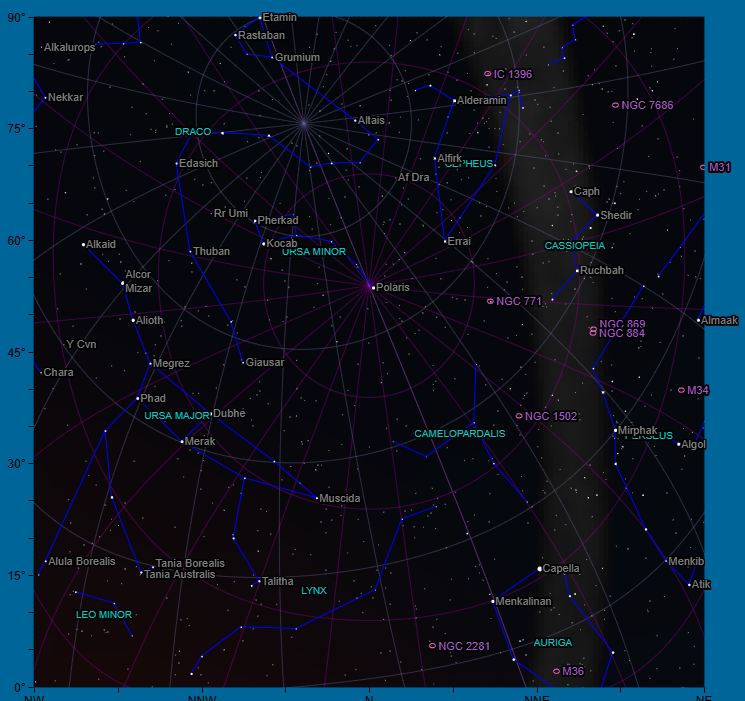
As August progresses, Ursa Major (the Great Bear) and its famous Plough asterism are now the ‘right way up’ in the northwest. High overhead, the constellations of Draco, Hercules, and Corona Borealis are clearly visible. The beautiful Pleiades star cluster begins to rise above the north eastern horizon later in the night. The Milky Way runs straight up the eastern side of the sky, carrying Cassiopeia and Cepheus with it.
The Southern Highlights
Looking south, the whole of the summer Milky Way stretches gloriously across the sky from Cygnus, past Aquila, and down to Sagittarius near the horizon. The “Teapot” asterism in Sagittarius points directly into the dense star clouds of our galactic centre. This region is packed with stunning nebulae and clusters, including the Lagoon Nebula (M8) and the Trifid Nebula (M20).
August 2026 Calendar
| Date | Time (UT) | Event | Details |
|---|---|---|---|
| Aug 02 | — | Mercury Elongation | Mercury reaches its greatest morning separation from the Sun. |
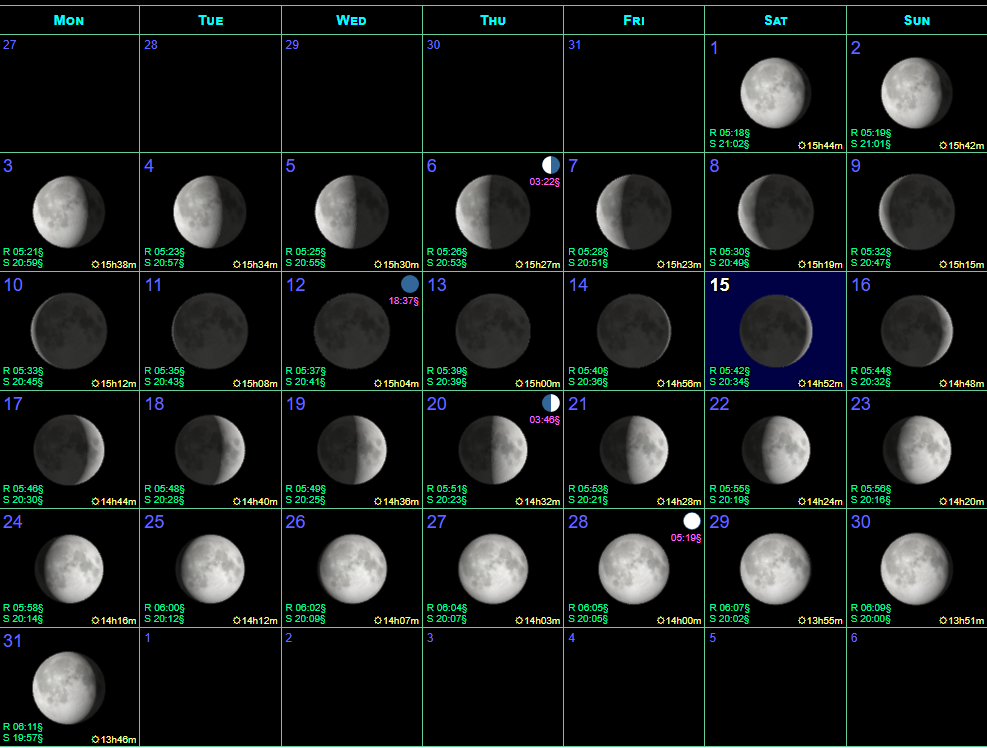
| Aug 06 | 03:21 | Last Quarter Moon | |
| Aug 12 | ~19:10 | Solar Eclipse | Major Event! Total eclipse in Iceland/Spain. A 91% partial eclipse in London (max 19:13 BST) and 98% in SW Ireland. |
| Aug 12 | 18:37 | New Moon | The Moon causes the solar eclipse! |
| Aug 12/13 | Night | Perseid Meteors | Peak of the Perseid meteor shower. Excellent dark sky conditions. |
| Aug 15 | AM | Mercury & Jupiter | Mercury passes close to Jupiter in the morning sky. |
| Aug 15 | — | Venus Elongation | Venus reaches its greatest evening separation from the Sun. |
| Aug 16 | Evening | Moon & Venus | A beautiful pairing of the crescent Moon and Venus. |
| Aug 20 | 03:46 | First Quarter Moon | |
| Aug 28 | 03:34 – 06:52 | Partial Lunar Eclipse | Major Event! At maximum (05:14 am), 93% of the Moon will be in Earth’s shadow. Visible from the UK and Ireland. |
| Aug 28 | 05:18 | Full Moon | Occurs during the partial eclipse! |
This table captures the astronomical events for August, including phases of the moon, planetary alignments, and other notable occurrences.
Sky Maps
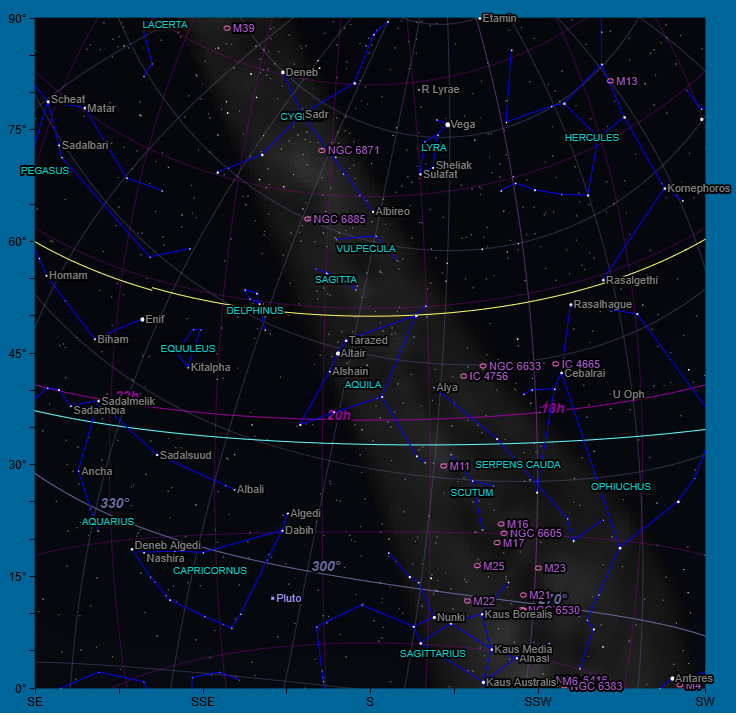
Looking South on the 15th at 23:00
Looking North on the 15th at 23:00
August’s Sky Guide
The Sun

August 2026 looks set to be an exciting and historic month for solar observers As we cruise through the active peak of Solar Cycle 25, our local star is providing a steady stream of activity. While the month begins and ends on a relatively quiet note, we have some fascinating solar weather lined up—including a well-timed quiet spell for the great eclipse and a lively geomagnetic disturbance mid-month.
🌌 Aurora Watch: Key August Windows
The Kp Index measures global geomagnetic activity. For August, NOAA forecasts two distinct periods of geomagnetic unrest:
- The Early Harvest Unrest (4–6 August): Earth will experience a minor solar wind disturbance, pushing the geomagnetic field to active levels. The Kp index is expected to reach 4 on 4 August (with the A-index peaking at 15 on the 5th). Observers in Scotland and northern England should keep a casual eye on the northern horizon.
- The Late August Storm (17–20 August): This is the main window for aurora chasers. A predicted surge in geomagnetic activity will peak on 19 August with a Kp 5 (G1 Minor Geomagnetic Storm) and a Planetary A-index of 22. With the Moon rising later in the evening, this represents a fantastic late-summer opportunity for UK-wide astrophotography’s if local skies remain clear.
☀️ Eclipse & Perseids: Pristine Conditions!
For those planning to watch the Total Solar Eclipse on 12 August (which will be a deep partial eclipse of over 91% in the UK) and the Perseid meteor shower peak on the night of 12/13 August:
- Eclipse Day (12 August): The Sun is predicted to be geomagnetically quiet, with a stable radio flux of 125 sfu and Kp 3. This is ideal for those hoping to view or image the solar corona safely, as a calmer magnetosphere means less dramatic but highly structured coronal streamers to observe.
- Perseid Peak Night: The geomagnetic field is forecast to drop to a quiet Kp 2 on 13 August. Combined with the New Moon on 12 August, there will be absolutely no natural lunar glare or auroral glow to wash out the faint shooting stars—creating the most pristine dark-sky conditions we’ve had in years!
☀️ Sunspot & Radio Flux Trends
For solar imagers using safe solar filters or H-alpha telescopes:
- The 10.7cm Radio Flux (our proxy for sunspot complexity) will hover at a steady 120–135 sfu for most of the month.
- A slight sunspot surge is expected around 18 August, when the solar flux is predicted to peak at 140 sfu, indicating some highly complex, photogenic active regions rotating into view just as the late-month geomagnetic storm begins.
📊 August 2026 Solar Activity Table
| Date Range | Max Solar Flux (10.7 cm) | Max Geomagnetic A Index | Max Kp | Activity Notes & Highlights |
|---|---|---|---|---|
| Aug 01–07 | 130 sfu | 15 | 4 | Moderate solar activity. Unsettled to active conditions (Kp 4) on 4–5 August. |
| Aug 08–14 | 135 sfu | 8 | 3 | Quiet Solar Window. Extremely stable geomagnetic conditions. Pristine dark skies for the 12 August Eclipse and 12/13 August Perseids! |
| Aug 15–21 | 140 sfu | 22 | 5 | Major Aurora Alert! Solar flux peaks at 140 sfu on the 18th, followed by a G1 Minor Geomagnetic Storm (Kp 5) on 19 August. |
| Aug 22–31 | 130* sfu | 5* | 2* | Quiet and stable late-summer conditions returning. (Note: NOAA forecast data currently extends to August 22). |
The Moon
August’s Lunar Calendar
Moon Feature
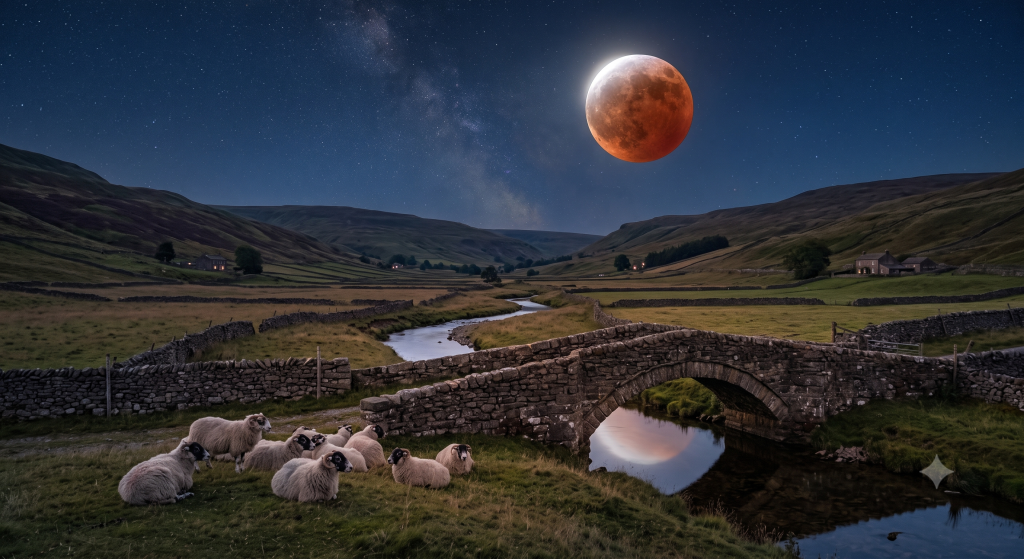
The “Almost Total” Lunar Eclipse (August 28)
If the solar eclipse on the 12th wasn’t enough, the Earth and Moon line up perfectly again on the morning of August 28 for a spectacular Partial Lunar Eclipse.
A lunar eclipse occurs when the Earth passes directly between the Sun and the Moon, casting its shadow across the lunar surface. This eclipse is visible from the UK, Ireland, and Europe.
While classified as a “partial” eclipse, it is a very deep one. At maximum eclipse, which occurs at 5:14 am BST, a massive 93% of the Moon will be submerged in the Earth’s dark central shadow (the umbra). Because it happens in the early hours of the morning as the Moon is getting lower in the west, it will be a fantastic, eerie sight to watch before dawn. You don’t need any special equipment to view it—just your eyes and a clear view to the west!
Planets

🟡 Venus
Though it is increasing in brightness (reaching an incredible magnitude –4.6 by the end of August), the “Evening Star” is sinking lower into the twilight glow, setting around 9:30 pm. It reaches its greatest eastern elongation from the Sun on August 15, forming a beautiful pairing with the crescent Moon on August 15 and 16.
🪐 Saturn
Rising on the opposite horizon at 10 pm soon after Venus sets, Saturn shines at magnitude +0.6 in Pisces. The Moon passes nearby on August 3.
🔴 Mars
Mars rises around 1:30 am, moving from Taurus into Gemini during August. Shining at magnitude +1.2, it passes just south of the lovely M35 star cluster on the morning of August 15—a beautiful sight in binoculars.
🟠 Jupiter
Jupiter reappears in our morning sky mid-month. Located in Cancer, it shines brilliantly at magnitude –1.8, rising around 4:30 am.
⚪ Mercury
Mercury reaches its greatest morning separation from the Sun on August 2. It remains visible low on the pre-dawn horizon for a couple of weeks, rising around 4 am and brightening to magnitude –1.2.
🔵 Uranus & 🔷 Neptune
Uranus (mag +5.8) is in Taurus, rising around 11:30 pm. Neptune (mag +7.7) lies in Pisces, rising about 9:30 pm, but requires binoculars or a telescope to spot.
Meteor Showers
The Perseids (Peak: August 12/13)
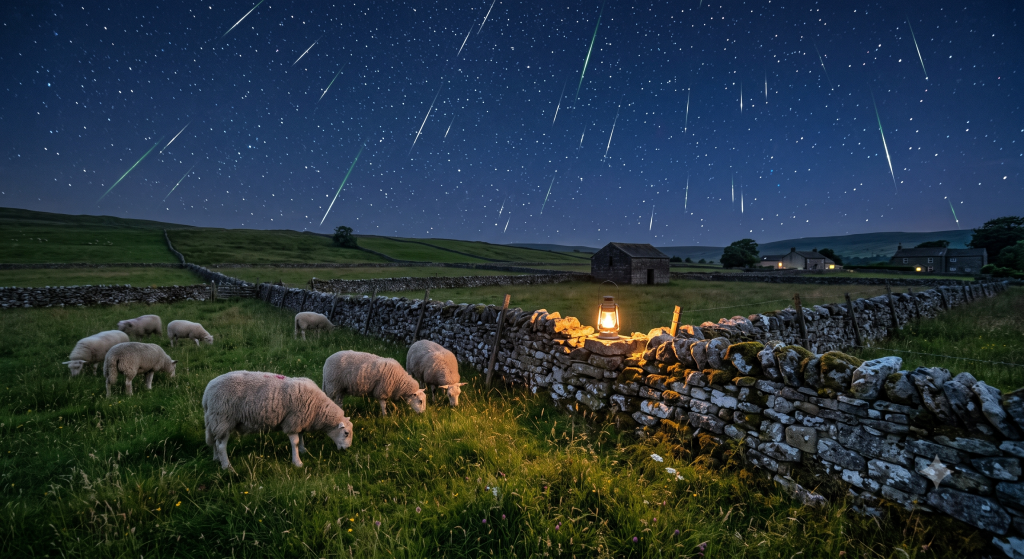
August is the month of the Perseids, one of the most reliable and spectacular meteor showers of the year.
Every August, the Earth ploughs through a stream of dust and debris shed by Comet Swift-Tuttle. These tiny cosmic grains hit our atmosphere at 210,000 km/h, burning up in flashes of glory.
This year presents absolutely perfect viewing conditions. The peak falls on the night of August 12/13, which coincides exactly with a New Moon. With zero moonlight to wash out the sky, observers in dark locations could see up to 100 meteors per hour radiating from the constellation Perseus!
Comets
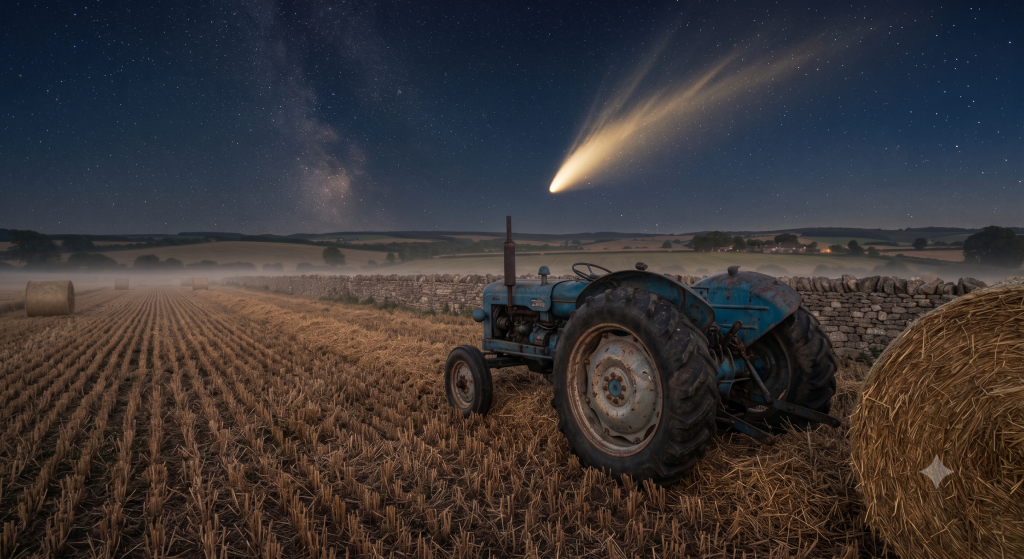
August 2026 brings us a wonderful cometary highlight! The short-period, Jupiter-family comet 10P/Tempel 2 reaches perihelion (its closest point to the Sun) on August 2, and makes its closest approach to Earth the very next day.
It has developed a dark, tar-like crust of hydrocarbons over many trips around the Sun, but this favourable return means it could brighten to magnitude 7.4. It will be passing through the constellations of Capricornus and Piscis Austrinus. While not a naked-eye spectacle, it is a fantastic target for binoculars or a small telescope, best viewed around midnight!
| Comet Name | Predicted Magnitude | Visibility Period | Notes |
|---|---|---|---|
| 10P/Tempel 2 | 7.4 – 8.0 | Midnight / Morning | The star of August! Closest approach to Earth on Aug 3. |
| 169P/NEAT | 10 – 11 | Midnight / Morning | A fainter telescopic target. |
| 78P/Gehrels 2 | 12 | Morning | Faint telescopic object. |
| 88P/Howell | 12 | Midnight / Morning | Faint telescopic object. |
Deep Sky (DSOs)
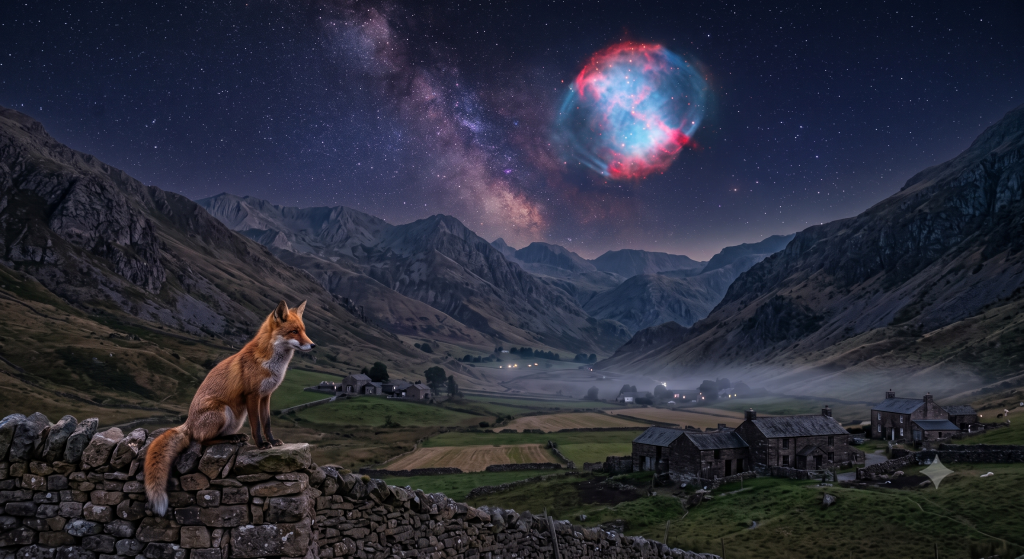
Deep Dive: The Dumbbell Nebula (M27)
While looking high overhead near the Summer Triangle this month, point your telescope or binoculars toward the small constellation of Vulpecula (the Fox) to find the magnificent Dumbbell Nebula (Messier 27).
A Ghostly Cosmic Apple Core
Shining at magnitude +7.5, M27 is a fantastic and easy target for binoculars and small telescopes. Through a moderate telescope, it appears as an out-of-focus bow-tie, a weight lifter’s dumbbell, or a narrow-waisted hourglass. This shape occurs because a dense ring of gas, previously ejected from the star’s equator, blocks the newly expanding gas and forces it to balloon out into opposite directions.
For the best view, seek out a dark sky and try using “averted vision” looking slightly to the side of the object to help your eyes adjust to the dim light and pick up the finer details.
The Death of a Star
M27 is what is known as a “planetary nebula”, a term originally coined by William Herschel because the round shapes of these objects in early telescopes reminded him of the planet Uranus. (It was his son, John Herschel, who later gave M27 the “Dumbbell” nickname because it resembled a double-headed cannon shot!).
Planetary nebulae have nothing to do with planets. They are created when an ageing star runs out of fuel and puffs its enveloping atmosphere out into space, completely blowing away its outer envelope. In the case of the Dumbbell Nebula, a dying red supergiant began puffing off its layers rapidly at nearly 20 miles per second roughly 10,000 to 50,000 years ago. By shedding this massive outer envelope, the dying star disperses fresh, heavy elements into interstellar space, which will eventually be recycled to form new generations of stars and planets.
The White Dwarf Engine
The exposed core left at the centre of the nebula is now a white dwarf star. It is prevented from collapsing completely by a quantum mechanical effect known as “electron degeneracy pressure”.
How it Works
In a normal star, thermal pressure from nuclear fusion prevents the star from collapsing due to gravity. However, in collapsed stellar remnants like white dwarfs, nuclear reactions have ceased, and gravity relentlessly compresses the core. So….
As the electrons are forced closer together, all the lowest-energy quantum states are filled up, leaving the remaining electrons nowhere to go but to move to higher, more energetic states. According to the Heisenberg Uncertainty Principle, highly constrained positions result in a wider distribution of momenta, causing the electrons to move at extremely high velocities. The combined kinetic energy of these fast-moving electrons creates an immense outward force the electron degeneracy pressure that balances the inward pull of gravity. Easy 🙂
sources :-
But….
The Chandrasekhar Limit
Counterintuitively, electron degeneracy pressure makes electron degenerate objects shrink as they get heavier. Which adds more mass and compresses the material further, forcing electrons to move even faster, which increases gravity’s squeeze.
There is a strict mass limit for this support, known as the Chandrasekhar Limit, which is about (1.44) solar masses. If a stellar core exceeds this mass, the electrons are pushed to move at speeds approaching the speed of light. As nothing can exceed the speed of light the pressure can no longer increase to combat gravity, resulting in a cataclysmic collapse into an even denser object like a neutron star or a black hole.
Aren’t you glad you asked 🙂
🔭 Junior Stargazers: The Great Eclipse!
A special guide for our young astronomers. Grab your coat, step outside, and look up!

Get ready, Junior Stargazers, because August 2026 is bringing us one of the most amazing sights in the entire universe!
🌑 The Solar Eclipse (August 12th)
On the evening of August 12th, the Moon is going to pass exactly in front of the Sun! This is called a Solar Eclipse.
Imagine holding a small coin up in front of your eye to block out a distant streetlamp. Even though the Moon is much smaller than the Sun, it is much closer to Earth, so it can block the Sun’s light!
For us in the UK, we will see a Partial Eclipse. That means the Moon won’t cover the Sun completely, but it will take a massive “bite” out of it! If you are in London, the Sun will be 91% covered, and if you live further west, it will be up to 98% covered. It will happen right around dinner time (just after 7:00 PM) as the Sun is getting low in the sky.
⚠️ THE GOLDEN RULE OF ECLIPSES! ⚠️
NEVER, EVER look directly at the Sun! Not even for a second! It can permanently damage your eyes. You cannot use normal sunglasses, binoculars, or telescopes.
How to watch it safely:
- Eclipse Glasses: You must use special, certified “Eclipse Glasses” that are so dark you can’t see anything through them except the Sun.
- Pinhole Projector: Ask an adult to help you poke a small round hole in a piece of card. Stand with your back to the Sun and hold the card up so the sunlight shines through the hole onto a blank wall or a piece of paper on the ground. You will see a perfect projection of the bitten, crescent-shaped Sun!
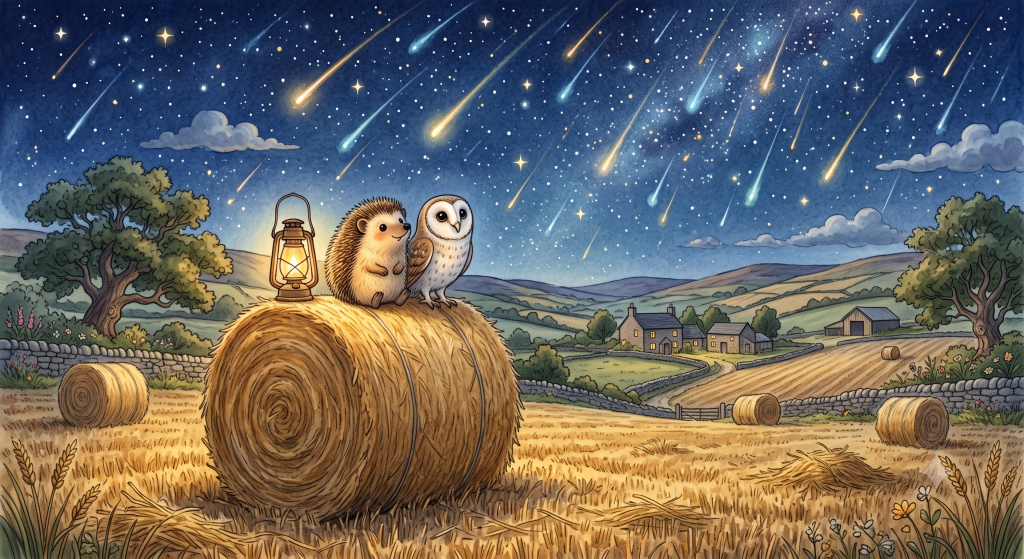
🌠 Cosmic Fireworks! (August 12th & 13th)
Once the Sun goes down on the night of the eclipse, the fun isn’t over! That very same night is the peak of the Perseid Meteor Shower. The Earth will be flying through a cloud of dust left behind by a comet. When these tiny dust specks hit the air above us, they burn up in flashes of light called “shooting stars”. Because there will be no moonlight to ruin the view, it is the perfect night to grab a blanket, lie back in the garden, and count how many you can see!
ISS and other orbiting bits
🚀 ISS Overpasses
Here is the data formatted into a clear Markdown table, ready to be dropped straight into the ISS and other orbiting bits section of your August column!
| Date | Mag | Start Time | Start Alt | Start Az | Max Time | Max Alt | Max Az | End Time | End Alt | End Az | Visibility |
|---|---|---|---|---|---|---|---|---|---|---|---|
| 1 Aug | -1.3 | 19:49:47 | 10° | NNW | 19:50:46 | 17° | N | 19:50:46 | 17° | N | visible |
| 2 Aug | -1.9 | 19:02:56 | 10° | N | 19:05:14 | 17° | NE | 19:05:32 | 17° | ENE | visible |
| 3 Aug | -1.9 | 19:51:00 | 10° | WNW | 19:53:22 | 29° | W | 19:53:22 | 29° | W | visible |
| 4 Aug | -3.8 | 19:02:58 | 10° | NW | 19:06:20 | 85° | SW | 19:08:16 | 23° | SSE | visible |
| 6 Aug | -1.0 | 19:05:14 | 10° | W | 19:07:21 | 16° | SW | 19:09:28 | 10° | SSW | visible |
| 7 Aug | -0.8 | 05:05:50 | 10° | SE | 05:06:54 | 11° | SE | 05:07:58 | 10° | ESE | visible |
| 9 Aug | -3.2 | 05:05:21 | 16° | SSW | 05:07:51 | 56° | SE | 05:11:07 | 10° | NE | visible |
| 10 Aug | -1.6 | 04:20:13 | 23° | ESE | 04:20:13 | 23° | ESE | 04:22:42 | 10° | ENE | visible |
| 11 Aug | -2.4 | 05:08:00 | 22° | WNW | 05:08:39 | 23° | NW | 05:11:22 | 10° | N | visible |
| 12 Aug | -1.6 | 04:22:44 | 21° | NNE | 04:22:44 | 21° | NNE | 04:24:01 | 10° | NNE | visible |
Useful Resources
- StarLust – A Website for People with a Passion for Astronomy, Stargazing, and Space Exploration.
- https://www.spacedaily.com/
- http://www.n3kl.org/sun/noaa.html
- http://skymaps.com/downloads.html
- Astronomy Calendar of Celestial Events – Sea and Sky (seasky.org)
- http://www.deepskywatch.com/deepsky-guide.html
- https://www.constellation-guide.com/
- IMO | International Meteor Organization
- https://in-the-sky.org/
- And of course, the Sky at Night magazine!