A monthly look at astronomical events in the sky and on Earth
Compiled and written by Steve Sawyer
Welcome to June’s edition of What’s Up
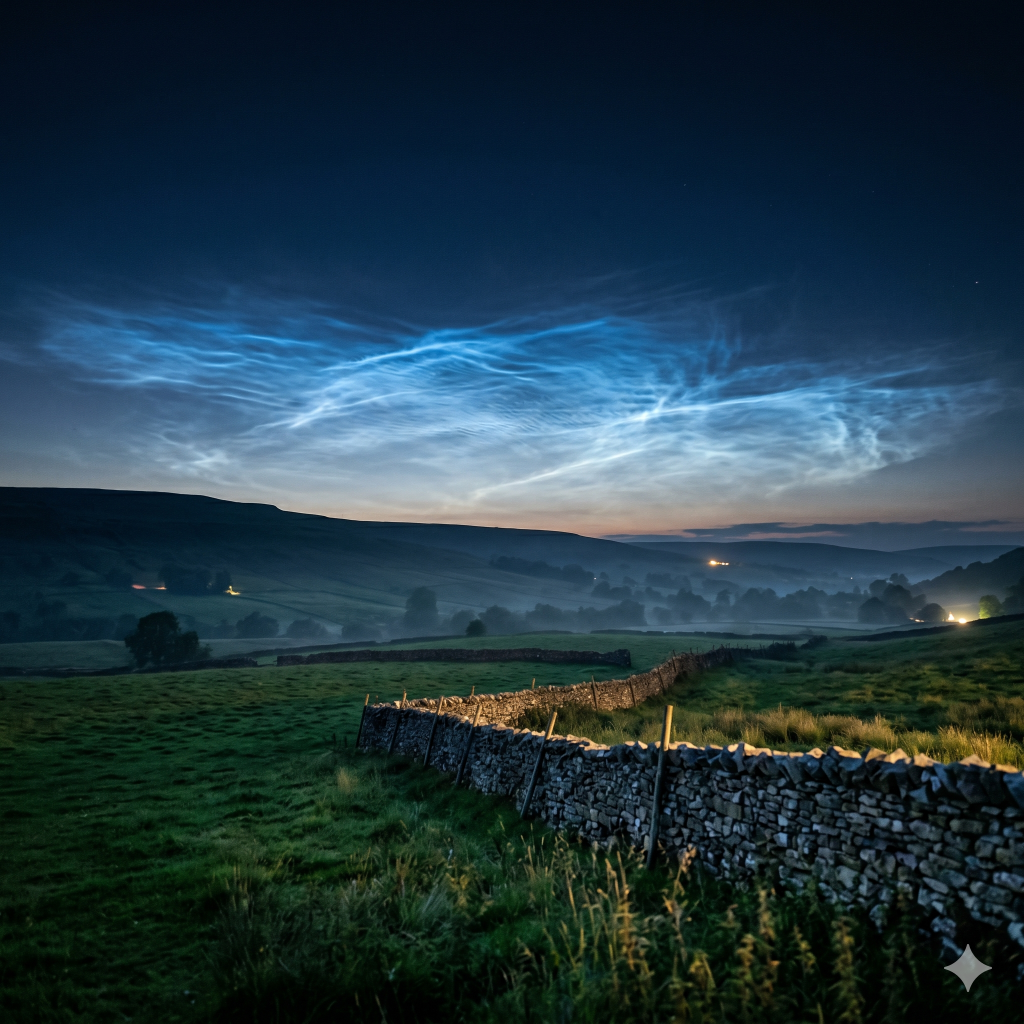
Welcome to June! As we approach the summer solstice on June 21, observers in northern latitudes will notice that true darkness becomes elusive, with a form of twilight persisting throughout the night. While the light skies hide the fainter stars, this is the perfect time of year to look out for the ghostly, electric-blue glow of noctilucent clouds shining high in the northern sky
June 2026 also offers a spectacular planetary show in the evening sky, as the two brightest planets, Venus and Jupiter, engage in a stunningly close conjunction.
Starting this month we also have a section for Young Astronomers. Scroll down to find it.
This Month’s York Astro Presentations
Upcoming events to put in your diary:
| Date | Title | Speaker |
|---|---|---|
| 05/06/2026 | Return to the Moon | Sue Bowler |
| 19/06/2026 | Astro Stuff Discovered on my Holidays! – Gerry Fisher + Under Southern Skies – Simon Howard | YAS Members |
For further details see the events page Astronomy Presentations by guest speakers | York Astro and our Facebook group (20+) The York Astronomical Society Chat Group | Facebook.
So what’s on this month?
Southern Sky
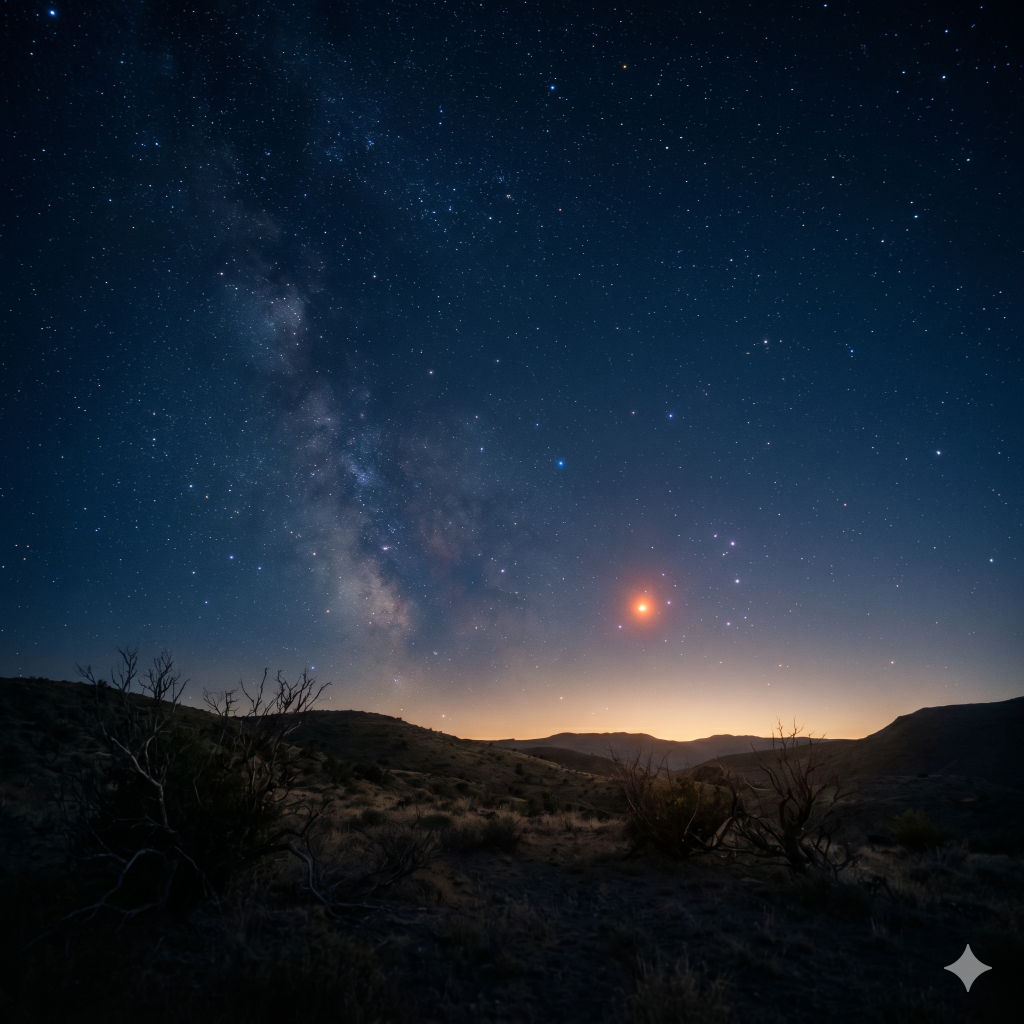
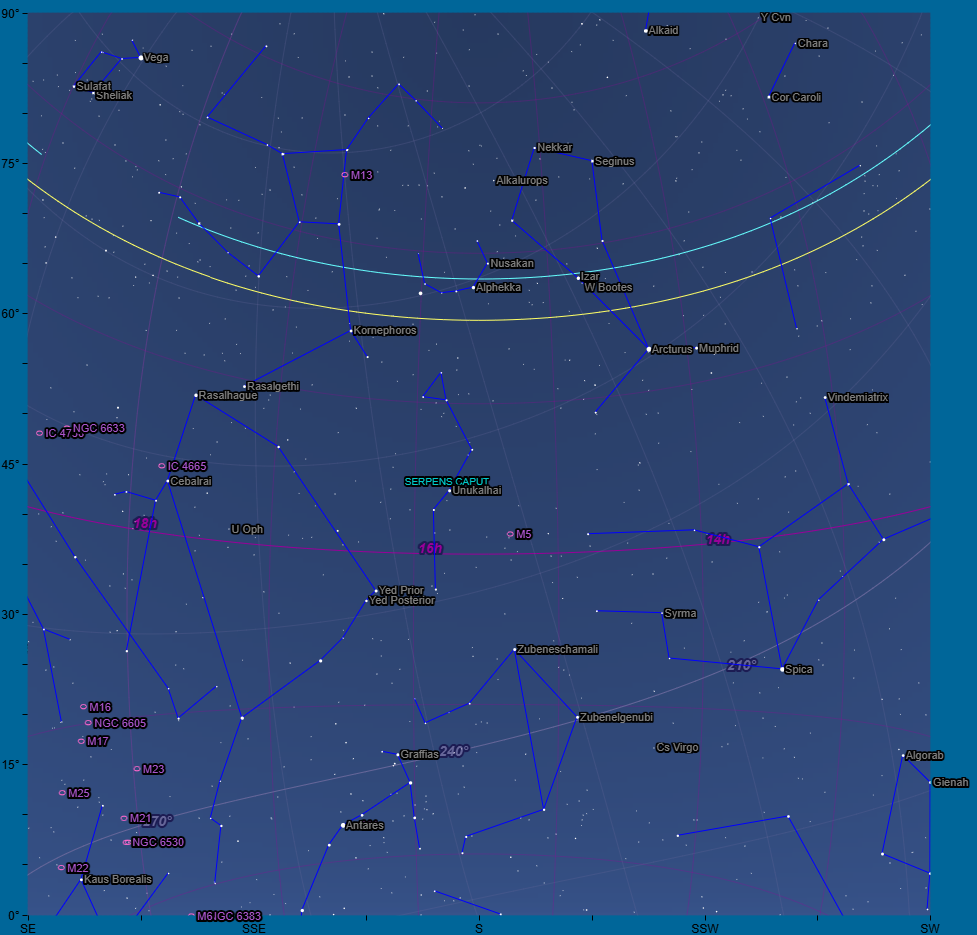
Looking south, despite the twilight, there is plenty to see . The zodiacal constellation of Libra lies almost due south . Just to its east, the fiery red supergiant star Antares—whose name means the “rival of Mars”—glows prominently in Scorpius, although the scorpion’s tail remains hidden below the horizon from our latitude . Above them sits the large constellation of Ophiuchus (the Serpent Bearer), which splits the constellation of Serpens into two halves: the head (Caput) to the west, and the tail (Cauda) to the east .
Northern Sky
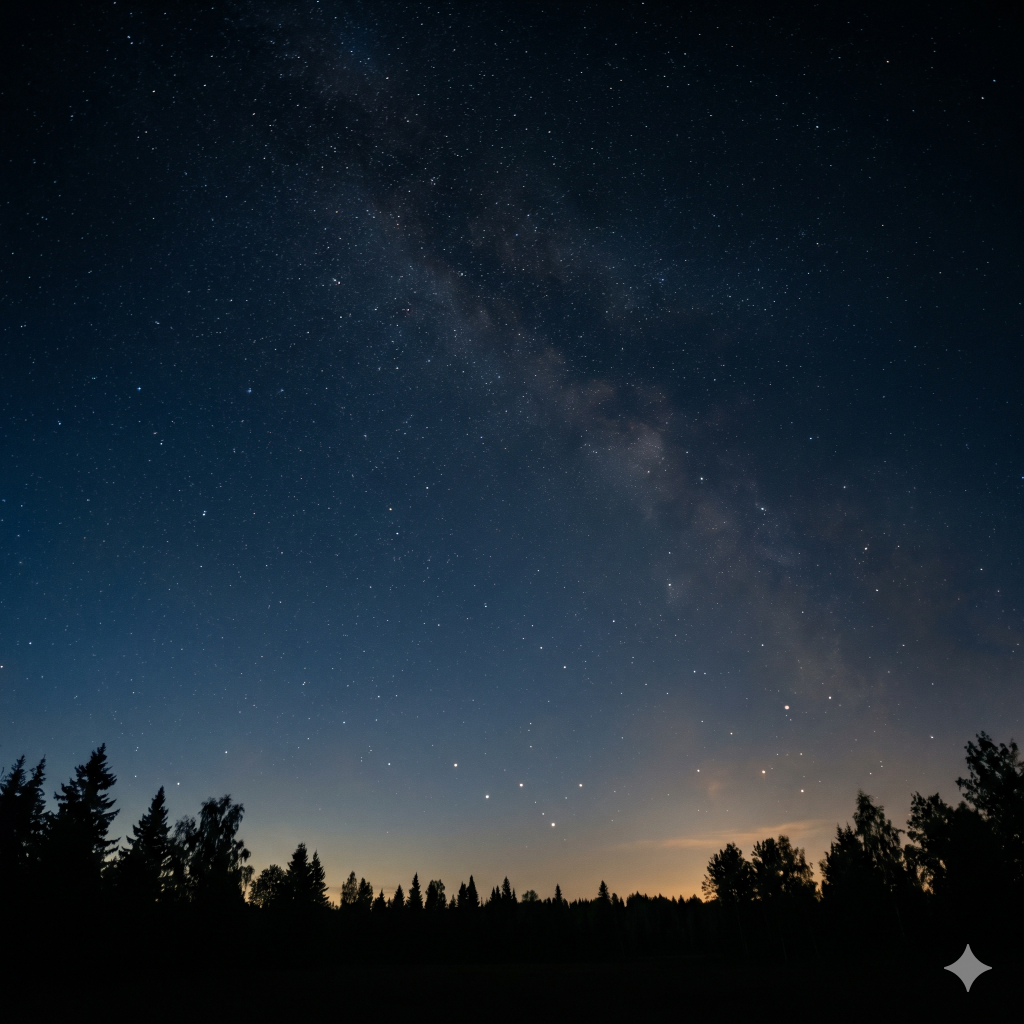
In June, the bright summer twilight means that most faint stars are invisible, but you can still pick out the brighter constellations . The familiar shape of the Plough (in Ursa Major) is moving into the western sky, while Boötes and its bright star Arcturus ride high overhead. The winding, cosmic dragon of Draco writhes perfectly between the two bears in the high northern sky .
June 2026 Calendar
| Date | Time (UT) | Event | Details |
|---|---|---|---|
| Jun 08 | 11:00 | Last Quarter Moon | [1] |
| Jun 09 | Evening | Venus & Jupiter | A splendid conjunction as Venus passes just 1.5 degrees from Jupiter [1]. |
| Jun 10 | AM | Moon & Saturn | Saturn lies below the crescent Moon before dawn [1]. |
| Jun 13 | AM | Moon & Mars | Look low on the horizon to the right of the crescent Moon to spot Mars [1]. |
| Jun 15 | 03:54 | New Moon | The darkest skies of the short summer nights [1]. |
| Jun 15 | — | Mercury at Elongation | Mercury reaches its greatest separation from the Sun in the evening sky [1]. |
| Jun 16 | Evening | Moon, Mercury & Jupiter | Mercury lies immediately below the crescent Moon, with Venus and Jupiter above [1]. |
| Jun 17 | Evening | Moon & Venus | Venus and the crescent Moon form a dazzling duo less than a degree apart [1]. |
| Jun 19 | Evening | Venus & Praesepe | Venus passes just above the Praesepe star cluster [1]. |
| Jun 21 | 09:24 | Summer Solstice | The Sun reaches its most northerly point, marking the longest day of the year [1]. |
| Jun 21 | 18:06 | First Quarter Moon | [1] |
| Jun 29 | AM | Mars & Pleiades | Mars passes 4 degrees below the Pleiades star cluster [1]. |
| Jun 30 | 00:56 | Full Moon | [1] |
*This table captures the astronomical events for June, including phases of the moon, planetary alignments, and other notable occurrences.
Sky Maps
Looking South on the 15th at 23:00
Looking North on the 15th at 23:00
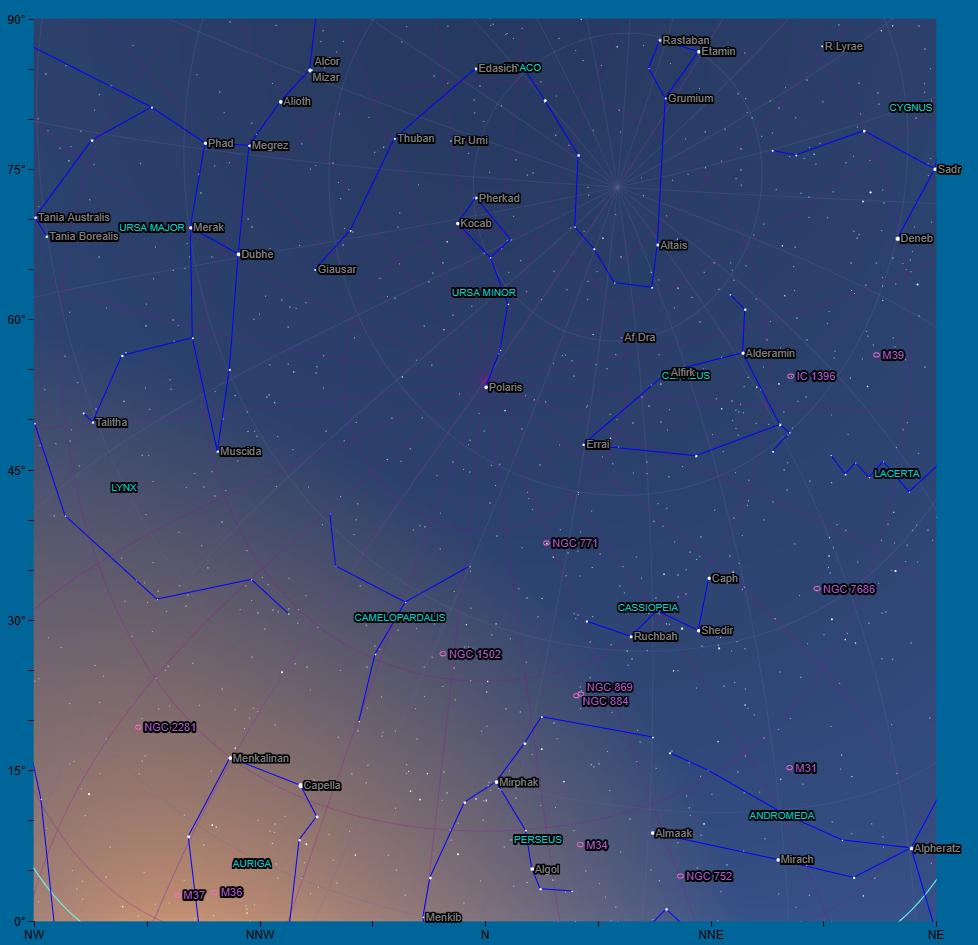
The two charts above show all DSOs of magnitude 6.0 or brighter. They are both taken from
SkyViewCafe.com and correct for the 15th of the month.
June’s Sky Guide
Noctilucent cloud season is underway over the next few months, and I’ll try to post some forecasts here when I can.
Noctilucent clouds, also known as “night-shining” clouds, are high-altitude clouds that glow after sunset or before sunrise. They form around 80 km above Earth’s surface, where the atmosphere is extremely cold and thin. These clouds are composed of tiny ice crystals that catch the Sun’s rays, creating bright, ghostly displays.
In the Northern Hemisphere, noctilucent clouds typically appear between late May and mid-August, mainly between latitudes 50° and 70°. In the Southern Hemisphere, they are visible from late November to mid-February. To spot them, look low on the northern (or southern) horizon about an hour or two after sunset or just before sunrise, under clear, dark skies. Visibility can vary from faint, delicate wisps to striking, vibrant formations depending on conditions.
For more information, check out Noctilucent clouds – Met Office, and here’s a beautiful video capturing them:
Watch on YouTube
The Sun
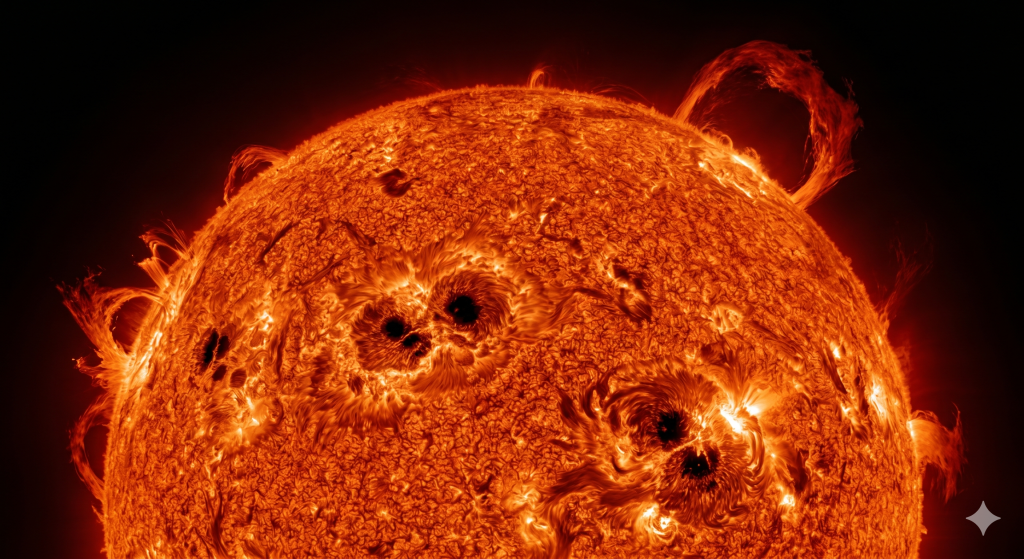
☀️ Solar Forecast – June 2026
As we navigate the heightened activity of Solar Cycle 25, predicting space weather is essential for knowing when to look out for auroras or complex sunspots. For June, the forecast indicates a gradual dip in solar flux as the month progresses, but it features a very exciting mid-month window for a moderate geomagnetic storm!
🌌 Aurora Watch: Key Storm Windows
The Kp Index measures global geomagnetic activity. For June, NOAA forecasts a fantastic mid-month opportunity with the index expected to reach Kp 6 (a G2 Moderate Geomagnetic Storm) and Kp 5 (a G1 Minor Geomagnetic Storm) due to coronal hole high-speed stream (CH HSS) influences.
- June 11: Kp 6 (G2 Moderate Storm). With the A-index spiking to 30, this is the most significant predicted event of the month! A G2 storm represents a brilliant opportunity for aurora chasers across the UK, potentially pushing displays south into England and Wales.
- June 12: Kp 5 (G1 Minor Storm). The geomagnetic unrest continues into the next night, keeping the window open for high-latitude observers to catch the lingering display.
☀️ Solar Activity: Sunspot & Radio Flux Trends
For those using solar telescopes or safe filters, the 10.7cm Radio Flux (a proxy for sunspot complexity) shows a steady decline this month, though the risk for flares remains:
- Early June (1 – 7 Jun): The month starts with moderate flux peaking at 150 sfu around June 3. NOAA notes the return of old active Region 4432 during this time, keeping the chance for M-class (Minor-Moderate) solar flares alive.
- Mid-June (8 – 14 Jun): The radio flux gradually dips from 130 sfu down to 115 sfu. Curiously, just as we have seen in previous months, this dip in solar emissions directly coincides with the highest geomagnetic disturbances of the month on the 11th and 12th!
- Late June (15 – 20 Jun): Activity drops to a quiet 110 sfu with very stable geomagnetic conditions (Kp 2), making it a great time for deep-sky observing without interference.
📊 Summary Table
| Date | Max Solar Flux (10.7 cm) | Max Geomagnetic A Index | Max Kp | Activity Notes |
|---|---|---|---|---|
| Jun 01–07 | 150 | 15 | 4 | Moderate solar activity, becoming unsettled (Kp 4) on Jun 4. |
| Jun 08–14 | 130 | 30 | 6 | Major Aurora Alert! G2 storm expected on Jun 11, G1 on Jun 12. |
| Jun 15–20 | 115 | 8 | 3 | Very quiet, stable conditions returning. |
| Jun 21–30 | N/A* | N/A* | N/A* | (Note: Current forecast data extends only to June 20). |
Aurora Forecasts
A bit US centred but still useful: Aurora Dashboard (Experimental) | NOAA / NWS Space Weather Prediction Center And our own Met-office have an excellent space weather forecast page here: Space Weather – Met Office
Aurora Forecasts
A bit US centred but still useful: Aurora Dashboard (Experimental) | NOAA / NWS Space Weather Prediction Center
And our own Met-office have an excellent space weather forecast page here: Space Weather – Met Office
The Moon
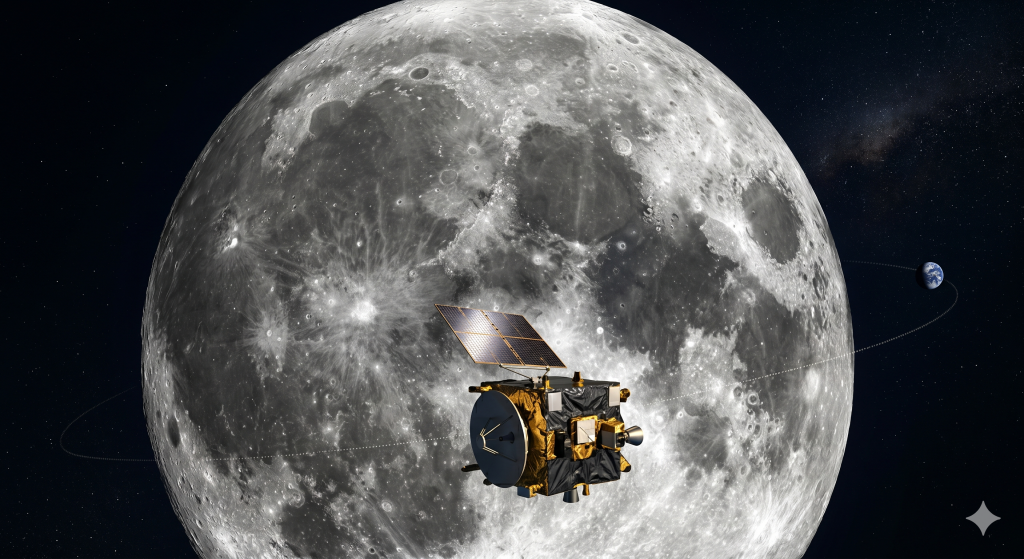
June’s Lunar Calendar
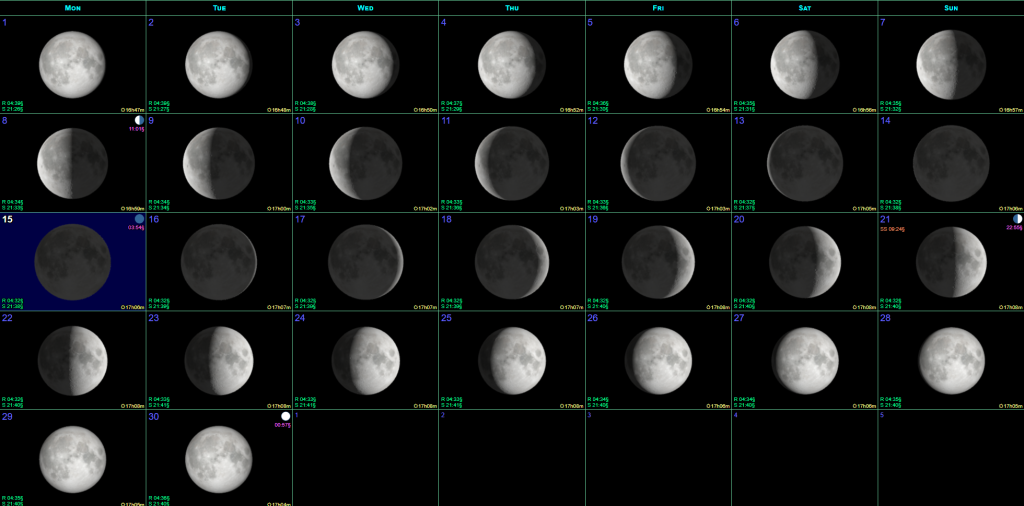
Junes moon calendar from Sky View Café (skyviewcafe.com)
Moon Feature
Chasing Ghosts: Transient Lunar Phenomena (TLP)
I’ve covered lot’s of the major and minor features in this section over the years. So this month instead of focusing on static geology, I’m challenging you to hunt for something a bit more elusive and mysterious: a Transient Lunar Phenomenon (TLP).
A TLP is a short-term change on, or above, the lunar surface that can take the form of a coloured glow, a brightness variability, an obscuration of detail, grey components to a shadow, or even sudden flashes. As far as Earth-based astronomers can tell, no permanent lunar surface changes result from these events, which is why they are considered truly “transient”.
The topic of TLPs is highly controversial. Because the Moon is essentially a geologically dead world, astronomers do not expect to see visibly active, kilometre-scale surface activity occurring today. Critics often argue that many of the historical sightings made by visual observers were simply tricks of the terrestrial atmosphere, optical issues with telescopes, or even psychological factors. Furthermore, TLPs are extremely rare, making them very difficult to study systematically.
Despite the controversy, there are a few well-authenticated cases among the nearly 3,000 claimed sightings. One of the most famous events occurred in the crater Alphonsus. In 1958, the astronomer N. A. Kozyrev successfully captured spectra showing actual gas emissions escaping from the crater’s central peak.
So, what causes them? Astronomers have proposed several plausible theories:
- Outgassing: Occasional subsurface gas eruptions could kick up a dust cloud. Depending on the particle sizes, this could cause brightness changes or even colours to appear against the low-albedo lunar surface.
- Impacts: Meteorite strikes are, so far, the only instance of TLPs that have been definitively proven.
- Specular Reflection: Some TLPs might just be the Sun’s glint reflecting off shiny components on the lunar surface, such as volcanic glass beads.
- Scattered Light: Observers may occasionally be tricked by light scattering off a sunlit rim of a shadow-filled crater, temporarily illuminating the dark floor inside.
The Challenge: Next time you are observing the Moon, turn your telescope toward the Alphonsus crater and monitor its central peak. While catching a TLP requires a great deal of luck and patience, monitoring for sudden flashes adds an exciting, dynamic element to your observing!
Planets
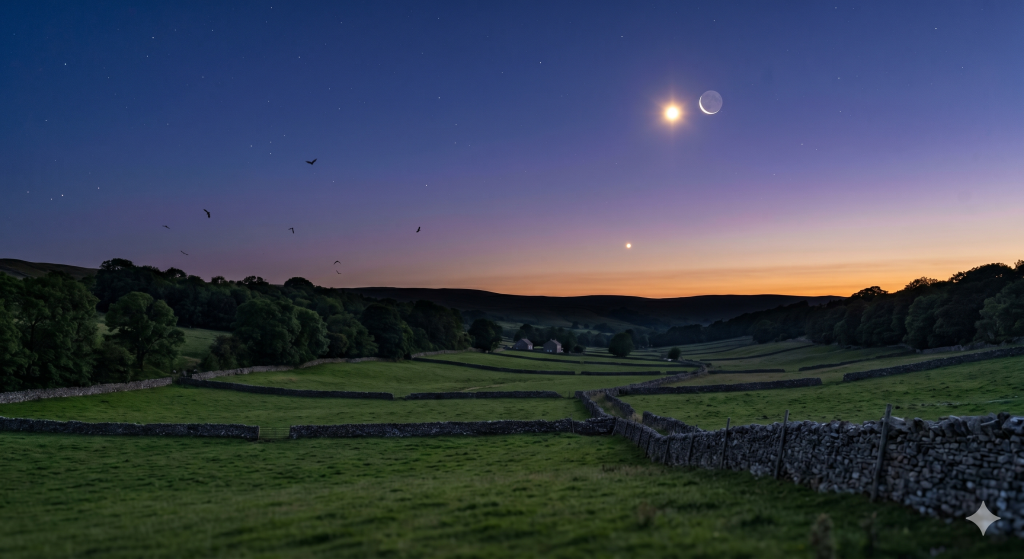
⚪ Mercury
During the first half of June, you can spot Mercury just above the western horizon to the lower right of Venus and Jupiter . It reaches its greatest elongation on June 15 . Setting around 11 pm, it fades from magnitude –0.5 on June 1 down to +0.6 by mid-month . Look for the crescent Moon right above it on June 16 .
🟡 Venus
Venus is glorious in the west this month, shining brilliantly at magnitude –4.0 and staying above the horizon until midnight. Moving inexorably upwards, the Evening Star passes just 1.5 degrees from Jupiter on June 9, creating a spectacular conjunction. It forms a dazzling pairing with the crescent Moon on June 17, and passes just above the Praesepe star cluster on June 19.
🔴 Mars
Mars appears in the north-eastern dawn twilight around 3 am, located in the constellation Taurus. On June 29, the Red Planet passes 4 degrees below the famous Pleiades star cluster.
🟠 Jupiter
Jupiter shares the same region of the sky as Venus this month, lying in Gemini in line with the bright stars Castor and Pollux. Though eight times fainter than Venus at magnitude –1.8, it is still brighter than any star. It sets about 11 pm.
🪐 Saturn
Saturn is now prominent in the morning sky, rising around 2 am. Shining at magnitude +0.8, it sits on the border of the constellations Pisces and Cetus. The Moon passes nearby on the morning of June 10.
🔵 Uranus
Uranus is lost in the Sun’s glare in June and cannot be observed.
🔷 Neptune
Neptune lies to the right of Saturn in Pisces, rising around 1:30 am. Glowing faintly at magnitude +7.8, it requires a telescope to spot.
Meteor Showers

June Bootids
- Peak Date: June 27
- Radiant: Near the constellation Boötes
- ZHR (Zenithal Hourly Rate): Variable, historically between 0-100 meteors per hour
- Visibility: Best viewed after midnight
- Description: The June Bootids are known for their unpredictability. While they have produced strong displays in the past, they can also be very weak. The shower’s activity can vary greatly from year to year. If there is an outburst, it can be quite a treat for observers.
Comets

June brings a couple of reliable telescopic targets for early risers and dedicated imagers.
| Comet Name | Predicted Magnitude | Visibility Period (Approx.) | Notes |
|---|---|---|---|
| 88P/Howell | 9 | Morning | A short-period Jupiter-family comet. Best seen low in the southeast before dawn. |
| 10P/Tempel 2 | 10 | Morning | Approaching its summer perihelion, this comet is brightening. Visible in the morning sky. |
| C/2024 E1 (Wierzchos) | 12 | Evening | Fading considerably now, but still trackable for imagers in the evening sky. |
| C/2025 A6 (Lemmon) | 12 | Morning | A faint telescopic object, but one to watch as it may brighten significantly by autumn. |
| 29P/Schwassmann-Wachmann 1 | 13 (Variable) | Most of the night | The unpredictable centaur. Always worth checking for sudden, massive outbursts. |
Data sourced from Seiichi Yoshida’s Visual Comets in the Future.
Deep Sky (DSOs)
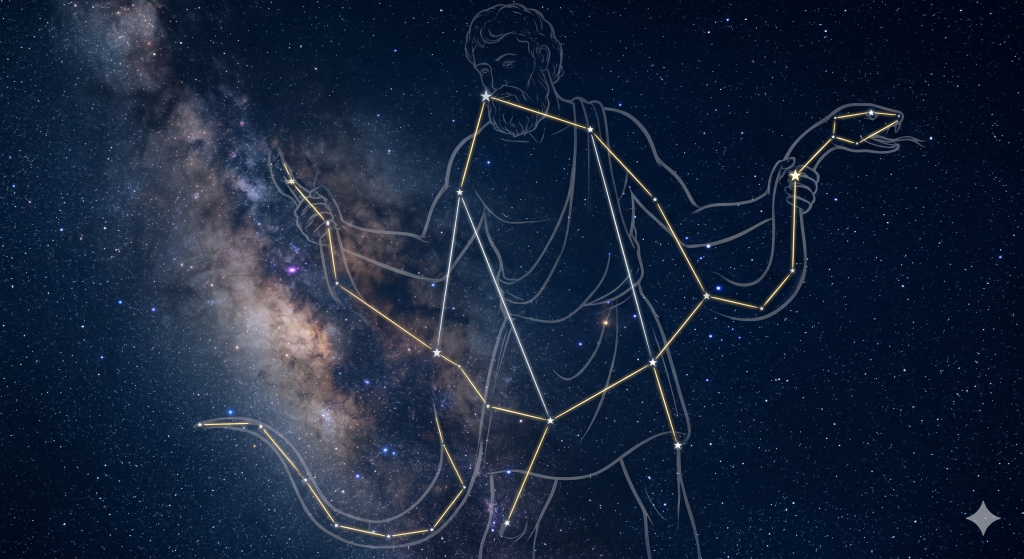
Deep Dive: The Serpent Bearer’s Treasures
June features a unique pair of intertwined star patterns: Ophiuchus (the Serpent Bearer) and Serpens (the Serpent). In Roman mythology, the serpent bearer represents Aesculapius, a healer who witnessed a serpent cure a mortally wounded snake with a herb, and used that same plant to save human lives .
Interestingly, Serpens is the only constellation that comes in two completely unconnected parts—Serpens Caput (the snake’s head) to the west, and Serpens Cauda (its tail) to the east. Ophiuchus sits right in the middle, splitting the snake in two . It is also worth noting that Ophiuchus crosses the ecliptic, making it the unofficial “thirteenth” zodiacal constellation where you might occasionally spot passing planets .
Here are the best objects and stars to explore within this massive celestial diorama:
Notable Stars
- Rasalhague (Alpha Ophiuchi): The brightest star in Ophiuchus, shining at a prominent magnitude 2.08 .
- Unukalhai (Alpha Serpentis): The brightest star in the snake’s head (Serpens Caput), shining at magnitude 2.63 .
- 36 Ophiuchi: A pleasant double star for telescopes. Its two orange dwarf components are evenly matched at magnitude 5.3 and separated by 5 arc seconds . Amazingly, this system is a relatively close neighbour to Earth, located just 18 light-years away !
- Theta Serpentis: Located in the snake’s tail (Serpens Cauda), this is a beautiful and easy double star to split. It consists of magnitude 4.6 and 5.0 stars with a generous 22.4 arcsecond separation.
Deep Sky Objects (DSOs)
- Messier 5 (M5): Located in Serpens Caput near the star Unukalhai, M5 is one of the oldest star clusters in the Milky Way. It is a huge, bright, compact globular cluster. Measuring about 130 light-years in diameter and lying roughly 27,000 light-years from Earth, it contains half a million tightly packed stars. It is a splendid sight in a moderate telescope.
- The Eagle Nebula (M16): Over in Serpens Cauda lies the Eagle Nebula, a giant cloud of glowing gas speckled with newborn stars. Hidden within its centre are the towering dark silhouettes of dust and gas famously known as the Pillars of Creation. While the pillars themselves require very dark skies or astrophotography to resolve, the associated star cluster is easily visible.
- M10 and M12: Ophiuchus is absolutely packed with globular clusters. To find this pair, look for the two stars Yed Prior and Yed Posterior (which form an “8 o’clock – 2 o’clock” alignment). M10 lies just one step due east of them, while M12 sits a third of a step to the northwest. Both are magnitude 6.6/6.7 objects that are fantastic targets for a small telescope under dark skies.
- M19 and M62: Two more globular clusters located in the southern regions of Ophiuchus. Both are bright (around magnitude 6.6) and present excellent low-power targets.
`
🚀 ISS Overpasses
| Date | Brightness (mag) | Start (Time / Alt / Az) | Highest Point (Time / Alt / Az) | End (Time / Alt / Az) | Pass Type |
|---|---|---|---|---|---|
| 2 Jun | -0.8 | 20:05:05 — 10° NW | 20:05:50 — 16° NW | 20:05:50 — 16° NW | Visible |
| 3 Jun | -3.4 | 19:17:16 — 10° NNW | 19:20:22 — 48° NE | 19:20:22 — 48° NE | Visible |
| 4 Jun | -2.1 | 18:30:01 — 10° N | 18:32:33 — 20° NE | 18:34:56 — 11° ESE | Visible |
| 4 Jun | -0.5 | 20:07:42 — 10° W | 20:07:55 — 11° WSW | 20:07:55 — 11° WSW | Visible |
| 5 Jun | -2.0 | 19:18:19 — 10° WNW | 19:21:10 — 26° SW | 19:22:30 — 20° SSW | Visible |
| 6 Jun | -3.5 | 18:29:55 — 10° NW | 18:33:13 — 67° SW | 18:36:32 — 10° SSE | Visible |
| 8 Jun | -2.0 | 05:18:19 — 10° S | 05:21:19 — 29° SE | 05:24:18 — 10° ENE | Visible |
| 8 Jun | -0.9 | 18:32:12 — 10° W | 18:33:49 — 13° SW | 18:35:26 — 10° SSW | Visible |
| 9 Jun | -1.0 | 04:31:32 — 10° SSE | 04:33:17 — 13° SE | 04:35:02 — 10° E | Visible |
| 10 Jun | -3.3 | 05:18:57 — 12° SW | 05:21:50 — 44° NW | 05:25:03 — 10° NNE | Visible |
| 11 Jun | -3.7 | 04:33:25 — 61° S | 04:33:48 — 69° SE | 04:37:08 — 10° NE | Visible |
| 12 Jun | -0.7 | 03:47:49 — 15° ENE | 03:47:49 — 15° ENE | 03:48:39 — 10° ENE | Visible |
| 13 Jun | -1.8 | 04:35:06 — 19° NNW | 04:35:06 — 19° NNW | 04:36:47 — 10° N | Visible |
| 14 Jun | -0.4 | 03:49:20 — 10° NNE | 03:49:20 — 10° NNE | 03:49:21 — 10° NNE | Visible |
*(Note: As satellite passes depend heavily on your specific location and the exact date, please use dedicated tracker apps or websites like Heavens-Above closer to the time for accurate May 2026 ISS overpass schedules.)
🔭 Young Astronomers
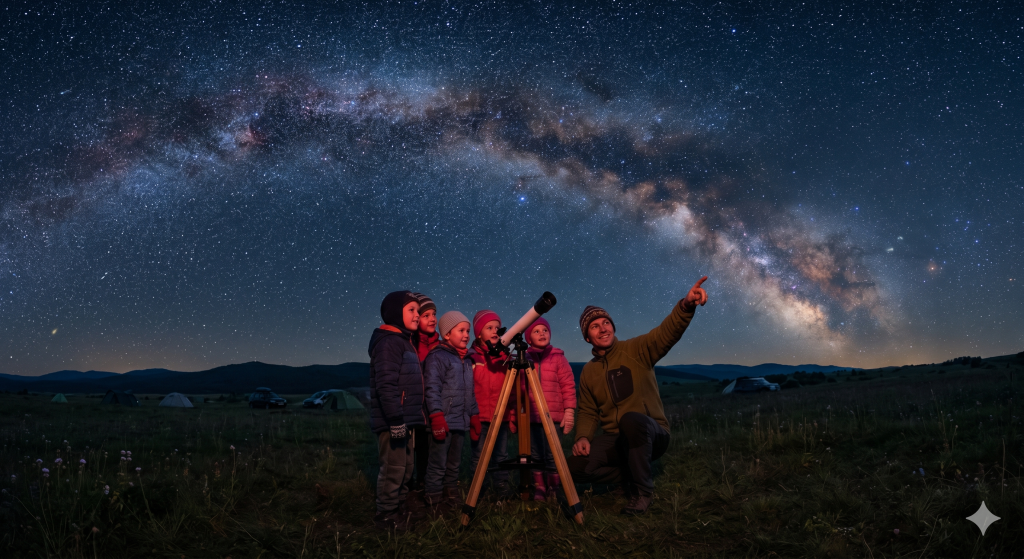
Hi welcome to the first section for young astronomers. This section will give you a guide to the exciting events taking place in the night sky in June.
Don’t forget to checkout the Young Astronomers website which is full of useful resources.
A special guide for our young astronomers. Grab your coat, step outside, and look up!
🌟 The Great Planet Meet-Up (June 9th)**
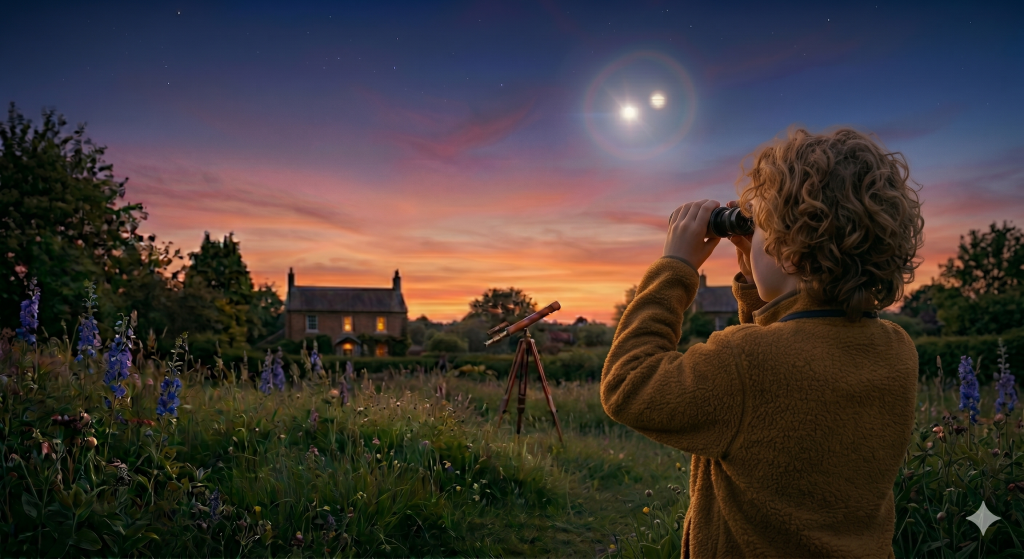
If you look towards the west just after the Sun goes down, you will see what looks like two incredibly bright stars very close together. But guess what? They aren’t stars at all! They are actually the planets Venus and Jupiter! On June 9th, they will appear so close together that they almost look like they are touching. See if you can spot them before they set!
👻 Hunt for Ghost Clouds!**
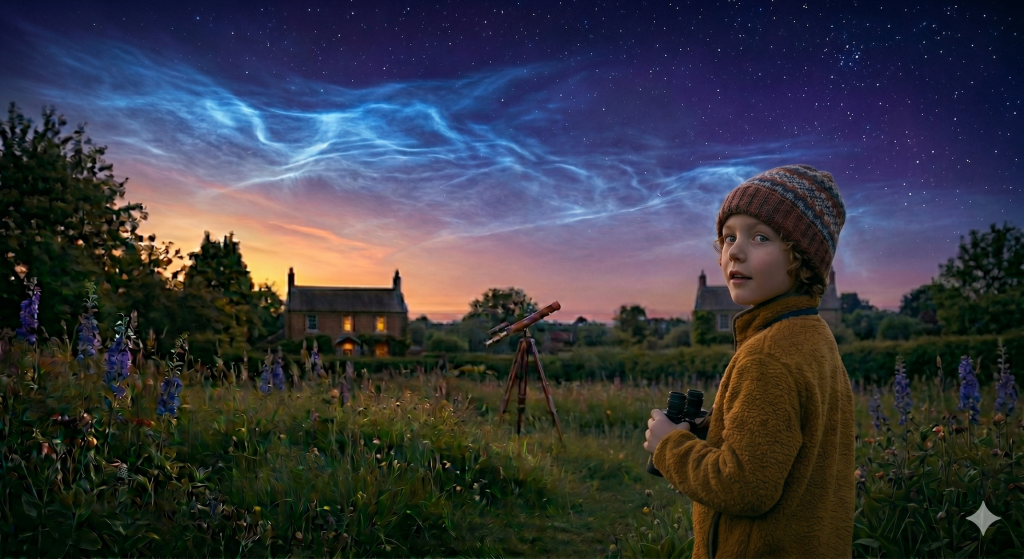
June is the best time of year to look for a super rare space weather trick called Noctilucent Clouds (which means “night-shining” clouds). These are the highest clouds in the world—floating 80 kilometres up at the very edge of space! Because they are so high, they catch the sunlight even after it is dark for us on the ground. Look towards the north around midnight. If you see wispy, electric-blue clouds glowing in the dark, you’ve found them!
☀️ The Longest Day of the Year (June 21st)
June 21st is the Summer Solstice. This means the North Pole is tilted as far toward the Sun as it can go, giving us the longest day and the shortest night of the entire year. It’s a great day to celebrate the Sun!
To understand the Earths tilt and orbit though out the year visitt our Young Astronomers orbital simulator :
https://seasons-orbit-simulator-962222698308.europe-west2.run.app
🌙 The Moon and the Evening Star (June 17th)
On the evening of June 17th, look west to find a beautiful, thin crescent Moon. Right next to it will be Venus (which is so bright it is often called the “Evening Star”). They will make a dazzling pair against the twilight sky.
❓ Try This Challenge:
Go outside on a clear night and look closely at the bright points of light in the sky. Can you see that some of them are twinkling, while others shine with a steady, solid light? Here is an astronomer’s secret: Stars twinkle, but planets don’t! The twinkling is caused by Earth’s wobbly atmosphere, but because planets are much closer to us, their light pushes right through the wobble. How many non-twinkling planets can you count tonight?
Useful Resources
- StarLust – A Website for People with a Passion for Astronomy, Stargazing, and Space Exploration.
- https://www.spacedaily.com/
- http://www.n3kl.org/sun/noaa.html
- http://skymaps.com/downloads.html
- Astronomy Calendar of Celestial Events – Sea and Sky (seasky.org)
- http://www.deepskywatch.com/deepsky-guide.html
- https://www.constellation-guide.com/
- IMO | International Meteor Organization
- https://in-the-sky.org/
- And of course, the Sky at Night magazine!
Great work again Steve
Very good again Steve, thanks.
Young Astronomers is a very good idea. YAS could invite young people to the Obs and meets.